




How to Build an AI-Powered Marketing Operating System Like Nectar Social
AI-Powered Marketing Operating System development is becoming one of the most powerful opportunities in modern MarTech because brands no longer want disconnected tools for social media, community management, influencer workflows, analytics, customer engagement, and commerce conversations. They want one intelligent platform that can listen, understand, act, automate, and improve marketing performance in real time.
Nectar Social has brought strong attention to this category by positioning itself as an AI social operating system for community, brand safety, commerce, influencer workflows, social selling, and analytics. Its rise shows that marketing teams are moving away from simple dashboards and basic scheduling tools. They now need AI agents that can manage comments, direct messages, audience sentiment, creator collaboration, customer intent, campaign insights, and revenue opportunities from one connected system.
For businesses, startups, agencies, and enterprises, this creates a major software development opportunity. A platform like Nectar Social can help brands manage digital conversations at scale, reduce manual marketing workload, improve customer response speed, and convert social engagement into measurable business growth.
In this detailed blog, Depex Technologies explains how to build an AI-powered marketing operating system like Nectar Social, what features such a platform needs, what technology stack should be used, how much Nectar Social platform development cost may be, and how a business can launch a competitive AI-first marketing product.
Why Nectar Social Is Getting Attention in the AI Marketing Space
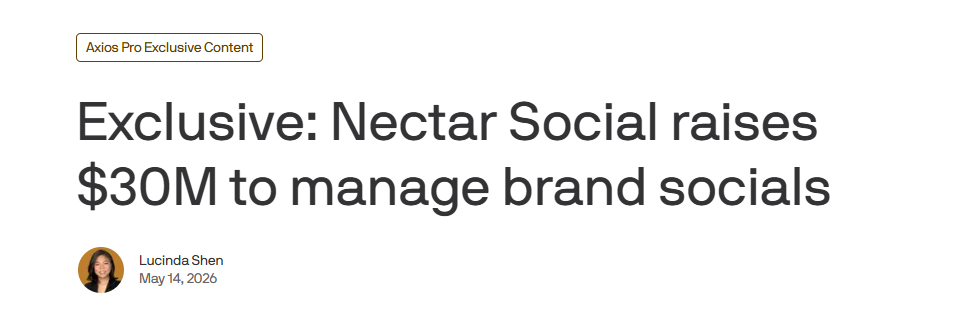
The marketing technology market is crowded, but Nectar Social stands out because it is not just another social media tool. It focuses on becoming an agentic operating system for marketers. Recent news has made the platform even more visible. Nectar Social raised a 30 million dollar Series A round led by Menlo Ventures and its Anthology Fund, which was created alongside Anthropic. The company also announced the launch of Nectar Agent, described as an autonomous AI agent for modern marketing.
This funding news matters because it confirms that investors are betting on AI-powered systems that can automate large parts of marketing operations. According to TechCrunch, Nectar Social uses autonomous AI agents to help brands run social activity, moderation, creator workflows, competitive intelligence, and commerce conversations from end to end. The company also has data partnerships with platforms such as Meta and Reddit to bring fragmented social data into one place.
This is exactly why AI-Powered Marketing Operating System development is now a high-value product category. Brands are overwhelmed by customer conversations happening across Instagram, TikTok, Reddit, Facebook, LinkedIn, X, YouTube, communities, comments, DMs, creator posts, and review platforms. Human teams cannot monitor every conversation, reply instantly, identify intent, protect brand safety, and convert social interactions into revenue without intelligent automation.
Nectar Social’s public website describes the product as an AI platform for community management, intelligence, and revenue at scale. It highlights use cases such as engagement, listening, performance, community management, brand safety, commerce, influencer marketing, social selling, and analytics.
For customers, this means the next generation of marketing software is not just about creating content. It is about building an intelligent marketing command center that connects brand voice, customer data, creator activity, campaign performance, and revenue intelligence.
Attention-Grabbing Market Update: Why Now Is the Best Time to Build This Platform
The biggest reason to build an AI-powered marketing operating system now is simple: marketing conversations have moved faster than marketing teams can handle.
Customers are not waiting for email campaigns anymore. They ask questions in comments, compare brands in Reddit threads, react to creator videos, send direct messages, join communities, and make buying decisions before a sales team even knows they exist. Nectar Social’s recent funding and launch of Nectar Agent show that the industry is moving toward AI agents that can support this new buying behavior.
This is a strong signal for businesses that want to enter the MarTech market. If a startup launches a well-built AI marketing operating system today, it can compete by solving real pain points: slow response time, scattered social data, manual moderation, weak creator tracking, inconsistent brand voice, poor campaign visibility, and missed revenue opportunities.
The customer attention point is this: brands are losing sales every day because they cannot be present everywhere their audience is talking. An AI-powered marketing operating system solves this by giving brands an always-on digital marketing brain. It listens continuously, understands intent, recommends actions, automates replies, supports human approval, and turns social engagement into revenue intelligence.
For companies planning AI-Powered Marketing Operating System development, this is not only a software idea. It is a business model with strong demand, high enterprise value, subscription potential, and long-term scalability.
What Is an AI-Powered Marketing Operating System?
An AI-powered marketing operating system is a centralized software platform that uses artificial intelligence, automation, analytics, integrations, and workflow intelligence to manage marketing operations from one place. Unlike traditional marketing tools, it does not solve only one task. It works like a connected brain for marketing teams.
A basic social media tool may schedule posts. A customer support tool may manage messages. An analytics tool may show dashboards. An influencer tool may track creators. A moderation tool may flag harmful content. An AI-powered marketing operating system combines these capabilities into one connected platform.
The goal is to help marketing teams listen, respond, analyze, plan, automate, collaborate, and optimize campaigns across multiple channels. AI agents can monitor brand mentions, classify comments, detect buying intent, suggest replies, summarize customer sentiment, track competitors, recommend creator partnerships, and identify conversion opportunities.
In simple terms, the platform becomes a marketing control center. It gives every team member a clear view of what customers are saying, what actions need attention, what campaigns are performing, what risks need moderation, and what revenue opportunities are hidden inside social conversations.
This is why AI-Powered Marketing Operating System development requires more than basic app development. It requires strong product strategy, AI model integration, data architecture, security planning, workflow design, API integrations, scalable cloud infrastructure, and an excellent user experience.
Core Features Required to Build a Platform Like Nectar Social
A successful platform like Nectar Social needs a complete feature ecosystem. Each feature should support the larger goal of turning social activity into customer intelligence and revenue.
1. Unified Social Inbox
A unified social inbox is one of the most important features. It brings comments, direct messages, mentions, replies, tags, and brand conversations from multiple platforms into one dashboard. Marketing teams should not need to open five or ten tools to understand what is happening.
The inbox should support smart filtering, priority detection, sentiment labels, customer history, team assignment, internal notes, approval workflows, and AI-generated response suggestions. For example, if a customer asks about price, shipping, discount, product quality, or return policy, the AI system should detect buying intent and move that conversation into a high-priority queue.
This feature improves response speed and helps brands avoid missed opportunities.
2. AI Agent for Customer Engagement
The AI agent is the heart of an AI-powered marketing operating system. It should understand brand tone, customer intent, platform context, product information, campaign rules, and escalation policies.
The agent can draft replies, answer common questions, summarize conversations, suggest next steps, detect angry customers, identify sales-ready users, and escalate sensitive issues to human teams. It should not act blindly. A mature system should support different automation levels, such as draft-only mode, approval mode, and autonomous response mode for low-risk interactions.
This balance builds trust because brands want automation, but they also want control.
3. Brand Voice Training System
A platform like Nectar Social must help brands maintain a consistent voice across all channels. The system should allow users to upload brand guidelines, FAQs, product documents, previous campaigns, approved replies, restricted words, compliance rules, and tone preferences.
The AI engine should use this knowledge to create responses that sound like the brand. A luxury skincare brand may need a calm and premium tone. A youth fashion brand may need a playful and energetic tone. A fintech brand may need a professional and compliant tone.
Brand voice training makes the platform more valuable because generic AI replies can damage customer trust. Custom brand-aligned AI replies improve engagement quality.
4. Social Listening and Sentiment Intelligence
Social listening helps brands understand what people are saying across public platforms, communities, comments, reviews, and competitor pages. The system should collect and analyze mentions, keywords, hashtags, product names, competitor names, campaign tags, and industry topics.
Sentiment analysis should classify conversations as positive, negative, neutral, urgent, confused, interested, or high intent. The platform should show trends over time, common customer complaints, product feedback, campaign reactions, and emerging topics.
This is where AI-Powered Marketing Operating System development becomes powerful. The platform does not only show data. It explains what the data means and recommends actions.
5. Moderation and Brand Safety
Brand safety is critical for modern marketing. Social channels can attract spam, offensive language, misinformation, fake accounts, harmful comments, and sensitive complaints. A marketing operating system should include AI-powered moderation workflows.
The system should detect toxic language, inappropriate content, legal risks, competitor attacks, spam links, crisis signals, and sensitive customer issues. It should allow brands to define moderation rules based on their industry and risk tolerance.
For example, a healthcare brand needs stricter compliance controls than a lifestyle brand. A children’s product company needs stronger safety rules than a general e-commerce store. AI moderation helps brands protect reputation while reducing manual workload.
6. Creator and Influencer Workflow Management
Nectar Social’s public positioning includes influencer and creator workflows, which is important because creator-led marketing is now central to brand growth. A similar platform should include creator discovery, influencer profiles, campaign briefs, contract tracking, content approval, performance analytics, payment status, and relationship history.
The AI layer can recommend creators based on audience fit, engagement quality, sentiment, content style, and campaign goals. It can also analyze creator comments to identify whether their audience is truly interested in the brand.
This feature can make the platform valuable for D2C brands, beauty brands, fashion companies, consumer apps, food brands, and lifestyle businesses.
7. Competitive Intelligence
Competitive intelligence helps brands understand how they compare against competitors. The platform should monitor competitor mentions, campaign launches, product feedback, audience sentiment, influencer collaborations, content performance, and customer complaints.
AI can summarize competitor trends and highlight opportunities. For example, if customers are complaining about a competitor’s delivery time, your brand can create a campaign around fast shipping. If a competitor’s product launch is getting strong attention, your team can study the messaging and adjust strategy.
This feature turns social data into strategic decision-making.
8. Commerce Conversation Tracking
Modern buying decisions often happen inside social conversations. Customers ask about sizes, prices, availability, delivery, ingredients, features, comparisons, and discount codes in comments or DMs. A strong AI-powered marketing operating system should detect these revenue signals.
The platform should tag commerce intent, connect with product catalogs, suggest product links, apply campaign rules, track conversions, and sync customer data with CRM or e-commerce platforms. It should help brands understand which conversations lead to sales.
This is especially useful for Shopify brands, WooCommerce stores, marketplace sellers, and enterprise retailers.
9. Analytics and Revenue Dashboard
A powerful analytics dashboard should show more than likes and shares. It should connect engagement with business outcomes. Important metrics include response time, sentiment trend, top customer questions, conversion opportunities, creator performance, campaign ROI, moderation volume, AI resolution rate, escalation rate, and revenue influenced by social conversations.
The dashboard should be easy to understand for marketing managers, founders, agencies, and executives. AI-generated summaries can explain what changed, why it matters, and what action should be taken next.
10. Workflow Automation
Workflow automation makes the platform scalable. Brands should be able to create rules such as assigning negative comments to support, sending product questions to sales, escalating legal complaints to compliance, hiding spam comments, and notifying managers about crisis trends.
The workflow builder should be visual, simple, and flexible. It should allow non-technical users to create automation without developer support.
AI Architecture Needed for Platform Development
AI-Powered Marketing Operating System development requires a strong architecture that can process large volumes of unstructured social data. The platform should be designed for speed, accuracy, scalability, and security.
The first layer is data ingestion. This layer connects with social APIs, advertising platforms, CRM systems, e-commerce platforms, email tools, analytics tools, and customer support software. It collects structured and unstructured data such as comments, DMs, product questions, campaign results, creator posts, and audience reactions.
The second layer is data processing. This layer cleans the data, removes duplicates, identifies users, normalizes formats, and prepares the content for AI analysis. It should also handle rate limits, API failures, retry logic, and real-time streaming where possible.
The third layer is AI intelligence. This includes natural language processing, sentiment analysis, intent detection, topic clustering, brand voice generation, AI response drafting, moderation classification, summarization, and recommendation engines. Large language models can be used with retrieval augmented generation so the AI agent answers based on approved brand knowledge rather than random internet knowledge.
The fourth layer is workflow orchestration. This controls what action happens after AI analysis. Should the system reply automatically, ask for approval, assign to a team member, create a support ticket, tag a customer, or send a Slack alert? The workflow engine makes AI useful in daily operations.
The fifth layer is analytics and reporting. This layer converts data into dashboards, insights, alerts, and executive summaries. It should support real-time reports and historical trend analysis.
The final layer is security and compliance. Since the platform handles customer conversations, brand assets, creator data, and possible personal information, it needs strong access control, encryption, audit logs, privacy settings, and compliance-ready architecture.
Recommended Technology Stack
The technology stack depends on the platform scale, budget, and launch timeline. However, a strong platform like Nectar Social needs a modern and scalable stack.
For frontend development, React.js or Next.js is suitable because it supports fast dashboards, dynamic interfaces, and SEO-friendly pages. For backend development, Node.js, Python, or Go can be used. Python is especially useful for AI workflows, machine learning pipelines, and natural language processing.
For databases, PostgreSQL is a strong choice for structured data, while MongoDB can manage flexible social content. Elasticsearch or OpenSearch can be used for fast search across comments, conversations, mentions, and customer records. Redis can support caching and real-time queues.
For AI models, businesses can integrate OpenAI, Anthropic, Google Gemini, or open-source LLMs depending on privacy, cost, and control requirements. Vector databases such as Pinecone, Weaviate, Milvus, or pgvector can support retrieval augmented generation and brand knowledge search.
For cloud infrastructure, AWS, Google Cloud, or Azure can support scalable deployment. Kubernetes, Docker, serverless functions, and event queues can help handle high-volume workloads.
For integrations, the system may connect with Meta, Reddit, TikTok, YouTube, LinkedIn, X, Shopify, WooCommerce, HubSpot, Salesforce, Zendesk, Intercom, Slack, Google Analytics, and advertising platforms. The platform should be built with API-first architecture so future integrations can be added easily.
Step-by-Step Development Process
The first step is product discovery. Before writing code, the development team must define the target users, business model, platform scope, supported channels, automation level, compliance needs, and revenue goals. This stage helps avoid unnecessary features and focuses the product on real market demand.
The second step is feature planning and MVP strategy. A minimum viable product should not try to copy every advanced feature at once. It should focus on the most valuable use cases, such as unified social inbox, AI reply suggestions, brand voice setup, sentiment analysis, workflow assignment, and analytics dashboard.
The third step is UI and UX design. A marketing operating system must be simple because marketing teams do not want technical complexity. The design should make it easy to view conversations, approve AI replies, check insights, manage workflows, and track performance.
The fourth step is backend and database development. This includes user roles, workspace management, social account connections, data storage, conversation history, campaign structure, notifications, permissions, and API management.
The fifth step is AI model integration. The development team should build prompt systems, brand knowledge retrieval, intent classification, sentiment analysis, moderation models, AI response generation, and feedback loops. Human feedback should be stored so the AI improves over time.
The sixth step is integration development. Social platforms and third-party tools should be connected carefully because each platform has its own API policies, limits, approval processes, and data rules.
The seventh step is testing. The platform must be tested for response accuracy, security, load handling, data sync, workflow logic, AI hallucination risk, permission control, and user experience.
The eighth step is launch and improvement. After launch, the platform should collect user feedback, improve AI quality, add integrations, refine analytics, and build advanced automation.
Nectar Social Platform Development Cost
The most common business question is: what is the Nectar Social platform development cost?
The answer depends on features, AI complexity, number of integrations, team location, platform scale, design quality, and security requirements. A simple MVP costs much less than a full enterprise-grade marketing operating system.
A basic MVP with social inbox, AI reply suggestions, brand settings, limited analytics, and two or three integrations may cost around 30,000 to 60,000 dollars. This version is suitable for startups that want to validate the idea quickly.
A mid-level platform with advanced sentiment analysis, creator workflows, moderation, team collaboration, workflow automation, CRM integration, and revenue dashboards may cost around 70,000 to 150,000 dollars. This version is suitable for growing SaaS companies, agencies, and funded startups.
A full enterprise-grade platform like Nectar Social with autonomous AI agents, real-time data pipelines, multiple social integrations, competitive intelligence, commerce tracking, custom AI training, multi-brand workspaces, advanced security, audit logs, and scalable cloud infrastructure may cost around 180,000 to 400,000 dollars or more.
Nectar Social platform development cost can also increase if the product needs enterprise compliance, multilingual support, white-label capability, advanced creator marketplace features, custom LLM deployment, or large-scale data partnerships.

The best approach is to start with a focused MVP and then scale feature by feature. This reduces risk, improves speed to market, and helps the business test customer demand before investing in a large platform.
Factors That Affect Development Cost
The number of social integrations is one of the biggest cost factors. Connecting with Meta, Reddit, TikTok, LinkedIn, YouTube, X, and other platforms requires different API handling, permissions, rate limits, webhook systems, and data mapping.
AI complexity also affects cost. Basic AI response suggestions are less expensive than a fully autonomous AI agent with brand memory, approval workflows, sentiment reasoning, compliance filters, and conversion tracking.
Data volume is another important factor. A small brand may process thousands of conversations per month, while an enterprise brand may process millions. Higher data volume needs stronger infrastructure, faster search, better queue systems, and advanced monitoring.
Security requirements also influence cost. Enterprise clients may need role-based access control, SSO, encryption, audit logs, compliance documentation, data retention policies, and private cloud deployment.
The quality of analytics can also change the budget. Simple dashboards are easier to build, while advanced revenue attribution, cohort analysis, creator ROI, predictive insights, and AI-generated reports require more engineering.
How to Make the Platform AI-First Search Friendly
Since the user asked for content that is easy to crawl by ChatGPT, Google, and other AI search engines, the same principle applies to software platforms and website content. An AI-first search friendly platform should be structured clearly, use schema markup, provide helpful documentation, and create content that answers real user questions.
For the website of an AI-powered marketing operating system, every key feature should have a dedicated landing page. There should be pages for AI social inbox, AI community management, AI moderation, influencer workflow automation, social listening, commerce conversations, competitive intelligence, and marketing analytics.
Each page should explain the problem, solution, benefits, use cases, integrations, FAQs, and pricing factors. Search engines and AI answer engines prefer content that is clear, complete, original, and well structured.
The platform should also publish educational blogs, product comparison pages, case studies, integration guides, API documentation, glossary pages, and industry-specific landing pages. This helps AI search engines understand the product category and recommend the platform for relevant queries.
For better crawlability, use clean URLs, proper heading hierarchy, internal links, FAQ schema, product schema, breadcrumb schema, fast page speed, mobile-friendly design, optimized images, and clear meta titles.
SEO Strategy for Ranking in a Competitive Keyword
AI-Powered Marketing Operating System development is a competitive keyword because it connects AI, MarTech, SaaS development, automation, and enterprise software. To rank well, a blog must provide complete topical coverage.
The content should not only mention the keyword. It should explain the concept deeply. Search engines reward helpful content that answers related questions such as what the platform is, how it works, what features it needs, what tech stack is best, how much it costs, how long it takes, and how businesses can monetize it.
The secondary keyword, Nectar Social platform development cost, should appear naturally in pricing-related sections. It should not be overused. Good keyword density means the content feels natural for readers while still making the topic clear for search engines.
This blog uses the main keyword in the introduction, headings, and body content. It also includes the secondary keyword in the cost section and related explanations. This supports SEO without keyword stuffing.
Monetization Models for an AI Marketing Operating System
A platform like Nectar Social can support several revenue models. The most common model is SaaS subscription pricing. Businesses can charge monthly or annual fees based on number of users, number of brands, number of social accounts, AI usage, and conversation volume.
Another model is usage-based pricing. Since AI processing has real cost, platforms can charge based on AI credits, number of automated replies, number of analyzed conversations, or number of generated reports.
Enterprise pricing can include custom integrations, dedicated account management, private deployment, compliance support, advanced analytics, and custom AI model tuning.
Agencies may prefer white-label pricing. This allows marketing agencies to offer the platform to their clients under their own brand.
The best business model depends on the target audience. Startups may prefer simple pricing, while enterprise customers usually expect custom packages.
Challenges in Building a Nectar Social-Like Platform
Building this kind of platform is highly rewarding, but it is also complex. One major challenge is API dependency. Social platforms can change API rules, pricing, permissions, and data access policies. The software must be flexible enough to adapt.
Another challenge is AI accuracy. Marketing replies must be safe, helpful, and brand-aligned. A wrong AI response can create reputational damage. This is why human approval workflows, brand rules, escalation systems, and moderation filters are important.
Data privacy is also a serious concern. The platform may process customer messages, personal details, and sensitive brand conversations. Strong security and compliance planning are not optional.
Scalability is another challenge. Social conversations can spike during campaigns, product launches, influencer posts, or crises. The system must handle sudden traffic without slowing down.
A final challenge is user trust. Marketing teams may not immediately trust autonomous AI. The platform should give users control, transparency, edit options, approval settings, and performance reports.
How Depex Technologies Can Help Build This Platform
Depex Technologies can help businesses transform this idea into a scalable, secure, and market-ready product. Building an AI-powered marketing operating system requires more than basic development. It needs expertise in SaaS architecture, AI integration, data engineering, API development, UX design, cloud deployment, automation, and product scalability.
Depex Technologies can support every stage of AI-Powered Marketing Operating System development, from idea validation and MVP planning to full platform launch and long-term scaling. The team can design user-friendly dashboards, build AI-powered workflows, integrate social media APIs, develop brand voice systems, create analytics modules, and deploy the platform on secure cloud infrastructure.

Startups can partner with Depex Technologies to build a lean MVP and test the market quickly. Funded companies can scale faster with a robust SaaS product powered by advanced AI features. Enterprises can rely on Depex Technologies to develop custom marketing automation platforms with strong security, compliance, and integration support.
If your business wants to enter the AI MarTech market, compete with platforms like Nectar Social, or build a custom AI marketing system for your own brand, Depex Technologies can help you reduce development risk and launch faster.
Conclusion
The rise of Nectar Social proves that the future of marketing software is AI-powered, agentic, connected, and revenue-focused. Brands no longer want separate tools for engagement, analytics, moderation, creators, social listening, and customer conversations. They want one intelligent operating system that can manage marketing activity from end to end.
AI-Powered Marketing Operating System development is a strong opportunity for startups, enterprises, agencies, and SaaS founders. A platform like Nectar Social can help brands stay present across social channels, respond faster, understand customer intent, protect brand reputation, manage creators, track competitors, and convert conversations into revenue.
The Nectar Social platform development cost depends on scope, features, integrations, AI complexity, and scalability needs. A focused MVP can start with essential features, while an enterprise-grade platform requires deeper investment. The smartest path is to build strategically, launch quickly, validate demand, and scale with real customer feedback.
If you are planning to build an AI-powered marketing operating system like Nectar Social, Depex Technologies is the right development partner. With the right product strategy, AI architecture, scalable engineering, and search-friendly digital presence, your business can create a powerful MarTech platform that attracts customers, wins trust, and competes in the fast-growing AI marketing software market.
Contact Depex Technologies today to discuss your AI marketing platform idea and start building a future-ready software product that can help brands manage conversations, automate growth, and turn marketing intelligence into real revenue.