




Custom Ecommerce Website Development vs Template Stores
Choosing a Website Development Agency in Netherlands is one of the most important decisions a growing online business can make. Dutch businesses now operate in a highly competitive ecommerce market where speed, trust, user experience, and search visibility all matter. As a result, one question comes up again and again. Should a business launch with a custom ecommerce website, or should it use a ready made template store?
At first glance, template stores look attractive. They are faster to launch, simpler to set up, and often cheaper in the beginning. For startups and small sellers, that can feel like the practical choice. However, the real picture is more complex. What works for a small test project may not work for a serious Dutch brand that wants long term growth, stronger visibility in search, better customer retention, and smooth business operations.
Custom ecommerce website development offers more than design freedom. It creates a store that matches the brand, supports unique business processes, improves site performance, and adapts as the company grows. In contrast, template based stores often force businesses to adjust their brand, workflow, and customer experience to fit the limits of the template. That may save time early on, but it can create problems later.
For Dutch businesses, this decision matters even more. The Netherlands has digitally mature consumers, high expectations for online convenience, strong demand for mobile friendly shopping, and a market that values trust, transparency, and efficiency. Customers expect smooth payments, clear shipping details, fast websites, localized content, and a shopping journey that feels professional. If a store does not deliver that experience, people leave quickly and buy from a competitor.
This detailed guide explains the real difference between custom ecommerce website development and template stores. It explores cost, branding, performance, SEO, AI first search visibility, user experience, scalability, integrations, security, and long term business value. Most importantly, it helps Dutch businesses understand which approach creates the strongest foundation for future growth.
Why This Decision Matters So Much for Dutch Businesses
Dutch ecommerce is not a casual market. It is a highly informed environment where customers compare products, prices, delivery promises, and trust signals within seconds. A good store does not simply display products. It must communicate reliability from the first click. That includes strong design, fast loading times, smart product filtering, mobile optimization, easy checkout, and clear content.
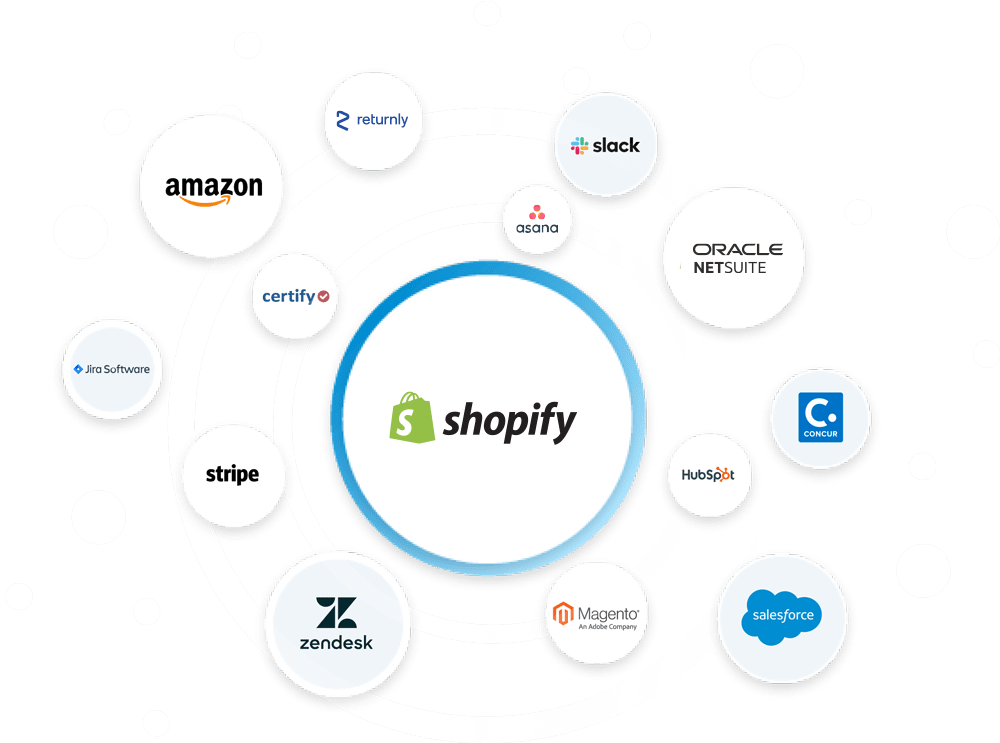
In the Netherlands, many businesses also serve multilingual audiences, cross border customers, or niche B2B and B2C segments. That makes flexibility essential. A basic template store may handle standard product listings, but it often struggles when a business needs custom shipping logic, advanced pricing models, regional language handling, customer specific catalogues, or integration with internal systems.
This is where the gap becomes clear. A template store is built for general use. A custom ecommerce website is built for business goals. That difference affects every stage of online growth, from brand perception to customer conversion.
When a business invests in the right digital foundation, it gains more control. It can shape the user journey, improve technical SEO, refine content architecture, and create a store that reflects how Dutch customers actually shop. In competitive sectors such as fashion, electronics, furniture, beauty, industrial products, food, and specialty retail, that advantage can directly influence revenue.
What Custom Ecommerce Website Development Really Means
Custom ecommerce website development means building an online store around the business itself rather than forcing the business into a pre built structure. The design, features, checkout flow, product display, navigation, integrations, and content system are all shaped according to the company’s goals.
This does not always mean building everything from zero. In many cases, a professional team creates a tailored solution using modern frameworks, ecommerce platforms, APIs, and custom modules. The key difference is that the final system is designed for the brand and the workflow, not limited by the fixed rules of a generic theme.
A custom ecommerce website can include advanced product filtering, personalized shopping experiences, dynamic pricing, custom quote systems, trade customer logins, multilingual support, location based content, and specialized checkout processes. It can also connect more smoothly with ERPs, CRMs, warehouse software, marketing tools, accounting systems, and customer service platforms.
For Dutch businesses, this level of customization is often valuable because local buyer expectations are high. Businesses may need custom tax handling, tailored invoicing, local payment method support, efficient delivery communication, or a more sophisticated product search experience. A custom solution makes these requirements easier to manage.
Most importantly, custom development gives a business strategic control. It can decide how the website should evolve in six months, one year, or three years. That level of ownership is difficult to achieve with rigid templates.
What Template Stores Offer and Why They Are Popular
Template stores are ready made ecommerce setups based on existing themes or design frameworks. Businesses choose a template, upload their logo, add products, update colors, and launch relatively quickly. For many small projects, this is appealing.
The popularity of template stores comes from convenience. The cost is lower at the beginning. The technical setup is less complex. Non technical users can manage many parts of the site themselves. For someone testing a product idea or launching a side business, a template can be a reasonable first step.
Templates also offer predictability. Many come with standard ecommerce features such as product pages, category pages, carts, checkout flows, and content blocks. This makes them useful for businesses with very simple needs and very limited budgets.
However, template stores are popular because they solve the early stage problem, not because they solve the long term growth problem. The issue is not that templates are bad. The issue is that they are built for average use cases. Once a business needs differentiation, deeper functionality, or advanced optimization, template limitations become visible.
A template store can help a business start. It rarely helps a serious brand dominate its market.
The Real Cost Difference Between Custom and Template Stores
Many businesses assume template stores are affordable and custom stores are expensive. That is only partly true. The better way to compare them is to look at total business cost over time.
A template store usually costs less at launch. That makes it attractive. Yet businesses often discover hidden costs later. They pay for premium plugins, paid extensions, third party apps, custom workarounds, performance fixes, design adjustments, checkout modifications, and recurring monthly fees. Over time, the store becomes a patchwork of add ons.
This creates more than financial cost. It creates operational friction. When many plugins or third party tools are stacked together, the store may slow down, conflict during updates, or break important features. The business then spends extra time and money managing technical issues instead of focusing on growth.
A custom ecommerce website often requires a larger initial investment. However, that investment creates a more focused system. The features are selected for the business. The design is planned for conversions. The integrations are structured properly. The performance is optimized from the start. As a result, the business spends less time fighting limitations and more time building revenue.

For Dutch businesses with serious online ambitions, the question should not be, “What is cheaper today?” The smarter question is, “What creates more value in the next three years?” In many cases, custom ecommerce development delivers a stronger return because it reduces future inefficiencies and supports better conversion performance.
Branding and Differentiation in a Crowded Market
A strong ecommerce brand is not just a logo placed on a homepage. It is the complete shopping experience. It includes layout, typography, product presentation, category structure, search behavior, mobile flow, micro interactions, and tone of communication. These elements shape how customers feel about a business.
Template stores make strong branding harder because many businesses use the same layout structure. Even after visual edits, the shopping experience often feels familiar in a generic way. Customers may not notice the problem consciously, but they feel it. The store looks like many others. That weakens memorability and trust.
Custom ecommerce development creates a brand specific environment. A Dutch business can design product journeys that reflect its market position, product type, and customer expectations. A premium furniture retailer can create a calm visual experience with rich storytelling. A fast moving electronics seller can build a comparison focused shopping path. A B2B supplier can simplify bulk ordering and quote requests.
This matters because modern customers judge credibility quickly. If a store looks standard, it may feel less established. If it feels tailored, smooth, and coherent, it signals professionalism. That perception influences conversion, average order value, and repeat purchase behavior.
For companies that want to stand out in the Dutch market, branding alone is a powerful argument in favor of custom development.
SEO, AI First Search Visibility, and Technical Performance
Search visibility is no longer only about ranking for a few keywords. Today, businesses must build content and website structures that are easy for Google, AI search tools, and conversational discovery systems to understand. This is where custom ecommerce website development often outperforms template stores.
A custom store gives full control over technical SEO architecture. The business can define clean URL structures, schema implementation, category hierarchy, internal linking paths, page speed priorities, crawl efficiency, indexation strategy, content templates, and landing page logic. It can also structure product and category data in ways that help search engines and AI systems interpret relevance more clearly.
Template stores often come with technical restrictions. Many are loaded with unnecessary scripts, theme code, or layout blocks that reduce page speed and create bloated markup. Some templates also limit structured data control or generate weak content architecture. Even when plugins exist to improve SEO, they often act as patches instead of real solutions.
For AI first search friendliness, clarity matters. Search systems increasingly reward pages that explain topics well, use descriptive headings, answer real user questions, and maintain semantic consistency. A custom store allows better control over how information is organized across product pages, service pages, blog content, help sections, and category content.
This is especially valuable when Dutch businesses target competitive queries related to products, service areas, or industry problems. A clean site structure makes it easier for search engines to crawl pages and for AI tools to extract meaningful answers.
Speed also plays a huge role. A slow store creates poor user signals. People leave faster. Bounce rates rise. Conversion rates drop. Template stores often suffer from this because they are built to support many visual options and many unrelated features. A custom store can be optimized to include only what the business actually needs.
For businesses that want to work with a Website Development Agency in Netherlands, SEO performance and AI search visibility should be central to the conversation. Design matters, but discoverability matters just as much.
User Experience and Conversion for Dutch Online Shoppers
A store can attract traffic and still lose sales if the shopping experience is weak. This is why user experience is one of the biggest deciding factors in the custom versus template debate.
Dutch customers expect simplicity. They want clear navigation, reliable product information, mobile responsiveness, transparent pricing, easy checkout, and trust signals throughout the journey. If a site feels cluttered or confusing, they move on quickly.
Template stores often create friction because they follow generic patterns. The layout may not fit the product category. The filter system may be too basic. The checkout flow may include unnecessary steps. The mobile version may look acceptable but not truly optimized.
Custom development solves these issues by building around actual customer behavior. A business can simplify navigation based on its catalogue. It can create custom filters that match buyer needs. It also can shorten the checkout flow. This can surface shipping details at the right moment. And It can highlight guarantees, returns, delivery windows, and customer support options in ways that reduce hesitation.
Good user experience also improves accessibility, engagement, and trust. When the journey feels intuitive, people spend more time exploring products. They view more pages. They abandon carts less often. These gains are not cosmetic. They directly influence revenue.
For Dutch businesses competing in busy sectors, conversion optimization is often the difference between moderate growth and strong growth. Custom ecommerce website development gives far more room to improve these critical moments.
Integrations and Business Operations
An ecommerce website is not only a front end sales tool. It is part of a wider business system. Orders, inventory, accounting, customer data, shipping processes, marketing automation, and reporting all depend on how well the website connects with other tools.
Template stores can support standard integrations, but problems appear when workflows become more specific. A business may need custom stock rules, ERP synchronization, marketplace integration, customer tier pricing, multi warehouse logic, or special invoicing flows. These needs are common in real businesses, especially as they grow.
When a template cannot handle these requirements properly, companies start using manual workarounds. Staff export files, update data by hand, or rely on several disconnected apps. This consumes time and increases the risk of mistakes.
Custom ecommerce development helps solve this by planning integrations from the start. The website becomes part of a connected digital ecosystem. Product data moves more smoothly. Orders reach internal systems faster. Marketing tools receive cleaner customer information. Teams work more efficiently.
For Dutch companies selling both online and offline, or operating in B2B and B2C channels, integration quality is especially important. The website must support the business model, not create daily complications.
Scalability and Future Growth
A business may launch with fifty products and one market. Two years later, it may have five hundred products, multiple customer segments, new shipping zones, several languages, or a wholesale channel. That is where scalability becomes essential.
Template stores often feel easy at the beginning because the business has not yet outgrown them. Once growth happens, structural limits start to show. Site speed may drop. Product management becomes harder. Category structures become messy. Custom business logic becomes difficult to implement. Major design changes become expensive because the template was never built for them.
Custom ecommerce websites scale more gracefully because they are designed with future needs in mind. The codebase, architecture, and content model can support expansion. New features can be added without breaking the entire system. Advanced analytics can be integrated. Region specific experiences can be introduced. Promotional tools can become more sophisticated.
This flexibility matters in the Dutch market because growth often happens through specialization and efficiency. Businesses refine their niche, improve fulfillment, expand into neighboring regions, or build stronger repeat purchase models. A custom store supports these moves instead of limiting them.
Working with a Website Development Agency in Netherlands becomes valuable here because the agency can align technical planning with business growth strategy. That creates a digital foundation that remains useful as the business evolves.
Security, Compliance, and Ownership
Security and compliance are essential in ecommerce. Customers share personal details, payment information, addresses, and order history. Businesses also need confidence that their website can handle updates, security patches, and privacy requirements effectively.
Template stores can be secure, but they often rely heavily on third party plugins and external add ons. Each additional component increases the surface area for risk. If one plugin becomes outdated or incompatible, it can affect the wider site. This is a common issue in heavily customized template stores.
A custom ecommerce website allows businesses to keep the technology stack more intentional. Fewer unnecessary dependencies often mean fewer vulnerabilities. Security can be planned according to the business model, traffic volume, and data sensitivity.
Ownership is another important issue. In template environments, many features depend on platform rules, app ecosystems, and theme limitations. Businesses may feel that they own the store, but in practice they depend on outside structures for critical functions. With custom development, businesses gain greater control over how their site works, how it evolves, and how data flows through the system.
For Dutch businesses that take long term digital growth seriously, control and reliability matter. The more valuable the ecommerce operation becomes, the more important it is to own a stable and adaptable platform.
When a Template Store Can Still Be the Right Choice
A balanced answer is important. Template stores are not always the wrong option. In some cases, they are practical.
A template store can work well for a very small business that needs to validate a product idea quickly. It can also suit a seller with a limited catalogue, simple operations, and no need for advanced branding or integrations. If the goal is to launch fast and test demand with minimal investment, a template may be enough for the first phase.
However, businesses should enter that decision with clarity. A template store is best viewed as a starting point, not always as a final business asset. If growth happens, migration or redevelopment may become necessary.
The problem comes when medium sized or ambitious businesses choose a template because it looks cheaper now, while ignoring the future cost of limitations. That is where strategic mistakes happen.
When Custom Ecommerce Website Development Is Clearly Better
Custom ecommerce website development is usually the better option when a business wants strong branding, high performance, scalable architecture, specialized functionality, better SEO control, and smoother integrations. It is also ideal when the ecommerce store is not just an experiment, but a major sales channel.
For Dutch businesses in competitive categories, custom development often creates a better long term position. It helps them present a more professional brand, serve customers more effectively, improve organic visibility, and manage operations more efficiently.
If a business wants to rank strongly, convert visitors more consistently, and build a digital asset that supports future growth, custom development is often the smarter investment. This is especially true when the business already understands its market, product range, and customer journey.
In simple terms, templates help businesses start. Custom development helps businesses lead.
Why More Dutch Businesses Are Choosing Custom Solutions
There is a clear reason many serious brands move toward tailored ecommerce systems. Competition is increasing. Customer expectations are rising. Search visibility is harder to win. Differentiation matters more than ever.
Dutch businesses are also becoming more data driven. They want stronger reporting, more control over customer journeys, better marketing integration, and faster experimentation. Custom systems make this easier. They allow businesses to test landing pages, improve product discovery, personalize offers, and adapt site features to real customer behavior.
At the same time, AI powered search and content discovery are changing how businesses think about digital presence. Stores need better page structure, clearer information, stronger technical foundations, and more topic depth. Custom development supports that more effectively than most generic templates.
Businesses that invest in custom solutions are not only buying design. They are investing in a growth platform.
Frequently Asked Questions
Is a custom ecommerce website always more expensive than a template store?
At launch, a custom website usually requires more investment. However, the long term value can be much stronger. Businesses often save time, reduce plugin costs, improve performance, and avoid costly rebuilds later.
Can a template store rank well on Google?
Yes, a template store can rank well in some situations. However, ranking becomes harder in highly competitive industries when site speed, content structure, technical SEO control, and user experience need deeper optimization.
Is custom ecommerce development better for SEO?
In most serious business cases, yes. Custom development gives better control over technical SEO, structured data, internal linking, content hierarchy, page speed, and crawl efficiency. These elements support stronger search performance.
What should Dutch businesses choose if they plan to grow quickly?
If growth is a serious objective, custom development is usually the better route. It creates room for new features, integrations, category expansion, multilingual support, and deeper conversion optimization.
Why work with a Website Development Agency in Netherlands?
A Website Development Agency in Netherlands understands local market behavior, Dutch user expectations, business requirements, and the need for scalable digital solutions. This local understanding can improve both strategy and execution.
Final Verdict: What Is Better for Dutch Businesses?
For very small businesses with basic needs and limited budgets, a template store can be a useful starting point. It offers speed and convenience. But for Dutch businesses that want stronger branding, better user experience, higher search visibility, smoother operations, and long term growth, custom ecommerce website development is the better choice.

The question is not only about building a website. It is about building a digital sales engine that reflects the business, supports customers, and grows with the brand. A template can make a store look functional. A custom solution can make the business more competitive.
If your company wants to stand out in the Dutch market, improve conversions, and create a future ready ecommerce platform, custom development is the smart path forward. This is where Depex Technologies can make a real difference.
Depex Technologies understands that successful ecommerce is not built from generic layouts and temporary fixes. It is built from strategy, performance, usability, and business aligned development. Whether you need a high converting online store, advanced integrations, scalable ecommerce software, or a fully tailored customer experience, Depex Technologies can help you build the right solution with precision.
If you are searching for a trusted Website Development Agency in Netherlands that can create a custom ecommerce platform designed for growth, this is the right time to connect with Depex Technologies. A stronger ecommerce future starts with the right development partner, and Depex Technologies is ready to help your business build it.