



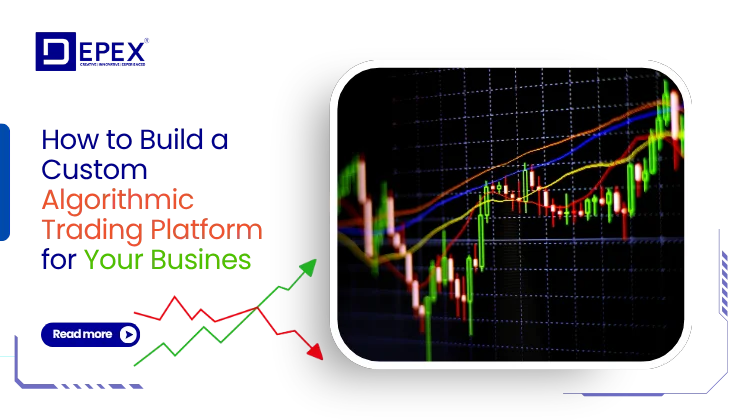
How to Build a Custom Algorithmic Trading Platform for Your Busines
Custom Algorithmic Trading Platform Development is becoming one of the most important technology investments for brokers, proprietary trading firms, investment businesses, fintech startups, wealth management companies, and serious trading operations. In a market where speed, data accuracy, automation, risk control, and compliance matter every second, a normal trading dashboard is no longer enough. Businesses now need intelligent trading platforms that can read market data, run tested strategies, manage risk, place orders, track performance, and help teams make faster decisions with better control.
Algorithmic trading means using software to execute buy and sell orders based on predefined rules. These rules can be simple, such as buying when a moving average crosses a certain level, or advanced, such as using statistical models, arbitrage logic, machine learning signals, multi-asset portfolio rules, and real-time risk limits. NSE defines automated trading as software or a facility where buy or sell orders are automatically generated and pushed into the trading system when specified parameters are fulfilled, without the need for manual order entry.
For a business, the real question is not only how to automate trading. The bigger question is how to build a secure, scalable, compliant, and business-ready system that fits your strategy, users, asset classes, risk rules, broker integrations, and future growth. This is where a professional Algo Trading Software Development Company becomes valuable.
In this detailed guide, we will explain how to build a custom algorithmic trading platform for your business, what features it must include, how the development process works, which technology stack is suitable, what security and compliance factors matter, and why Depex Technologies can be the right technology partner for your trading software project.
What Is a Custom Algorithmic Trading Platform?
A custom algorithmic trading platform is a software system designed to automate trading decisions and execution based on business-defined rules. It is not a basic trading app. It is a complete technology ecosystem that can include market data processing, strategy creation, backtesting, paper trading, live execution, broker API integration, dashboards, admin controls, audit logs, risk management, reporting, alerts, and user management.
A ready-made platform gives limited flexibility. A custom platform is built around your business model. For example, a broker may need retail algo tools with client permissions and compliance reporting. A proprietary trading desk may need high-performance order routing and real-time strategy monitoring. A fintech startup may need a subscription-based strategy marketplace. A wealth management company may need portfolio rebalancing automation and client-wise risk rules.
Custom Algorithmic Trading Platform Development allows your business to decide how the system should work, what data it should use, which brokers or exchanges it should connect with, how strategies should be tested, who can access which module, and how trading risks should be controlled.
Why Businesses Are Investing in Algorithmic Trading Platforms
The trading industry is moving toward automation because manual trading has many limitations. Human traders can miss signals, react late, make emotional decisions, and struggle to monitor multiple instruments at the same time. Algorithmic systems can scan large data sets, trigger actions faster, apply rules consistently, and generate detailed logs for review.
A business may invest in a custom algorithmic trading platform for many reasons. The first reason is speed. Automated systems can respond to predefined market conditions faster than manual users. The second reason is discipline. The system follows the strategy rules without fear, greed, or hesitation. The third reason is scalability. A single platform can monitor multiple strategies, assets, users, accounts, and broker connections. The fourth reason is data-driven decision-making. A good platform gives reports, analytics, performance comparison, risk exposure, and historical testing. The fifth reason is business control. With a custom system, you own the workflow, branding, user experience, and future roadmap.
For businesses offering trading products to customers, automation also creates new revenue opportunities. You can launch subscription plans, strategy access, signal products, broker-linked trading tools, analytics dashboards, institutional tools, or custom fintech products.
Custom Platform vs Ready-Made Trading Software
Many businesses first think about using an existing trading tool. That can be useful for basic needs, but it may not support long-term business goals. Ready-made platforms are often limited by fixed features, fixed integrations, fixed user journeys, and limited control over data. They may also create dependency on a third-party product roadmap.
A custom platform gives you ownership and flexibility. You can build your own strategy module, user dashboard, broker integration layer, reporting system, risk engine, and admin controls. You can also add new features whenever your business expands. And You can also design your platform around your brand, your users, your target countries, and your compliance needs.
For example, if your business wants to offer algo trading to customers in India, your platform must consider local broker API flows, order tagging, approval processes, audit logs, risk checks, and regulatory updates. SEBI issued a circular in February 2025 on safer participation of retail investors in algorithmic trading, and NSE has also published updated procedure information for decision support tools and algorithm trading categories, including approved algorithms, non-approved algorithms, institutional client algorithms, and client direct API or member frontend for retail algo.
That kind of business-specific requirement is difficult to manage through a generic tool. A custom solution is better when the platform is part of your core business model.
Main Business Models for Algorithmic Trading Platforms
Before starting Custom Algorithmic Trading Platform Development, you must clearly define your business model. The platform design depends on what you want to offer.
A broker-focused platform may include client onboarding, trading permissions, strategy approval, broker-side risk checks, exchange audit logs, and compliance reports. A proprietary trading platform may focus on ultra-fast execution, strategy research, portfolio exposure, capital allocation, and internal risk limits. A strategy marketplace may allow verified strategy creators to publish strategies and users to subscribe. A SaaS algo platform may offer backtesting, paper trading, broker connection, and plan-based access. A fund or wealth management platform may use algorithmic rules for portfolio allocation, rebalancing, hedging, and reporting.
A serious Algo Trading Software Development Company will not start directly with coding. It will first understand the business model, target users, asset classes, markets, compliance needs, revenue model, and expected traffic. This discovery stage saves cost and prevents wrong architecture decisions.
Core Features of a Custom Algorithmic Trading Platform
A strong algorithmic trading platform is built with multiple modules. Each module must work smoothly with the others. Below are the most important features your business should consider.
1. User Onboarding and Role Management
Every trading platform needs secure user onboarding. If the platform is internal, you may need roles for traders, analysts, admins, compliance officers, developers, and risk managers. If the platform is customer-facing, you may need client registration, identity checks, plan management, account linking, broker connection, consent forms, and permission settings.
Role management is important because not every user should access every feature. A strategy developer may create and test algorithms but may not approve live deployment. A risk manager may define limits but may not change strategy logic. An admin may manage users and subscriptions but should not see sensitive trading credentials unless required. This improves security and operational control.
2. Strategy Builder and Algorithm Engine
The strategy builder is the heart of the platform. This is where trading logic is created. Some platforms use a code-based strategy builder where developers write Python, JavaScript, C++, or another language. Some platforms use a no-code or low-code interface where users select indicators, rules, conditions, and actions. Advanced platforms support both.
The algorithm engine should process market data, evaluate strategy rules, generate signals, apply risk checks, and send orders to the order management system. It should support different strategy types, such as trend-following, mean reversion, arbitrage, market-making, portfolio rebalancing, options strategies, news-based signals, and machine learning based models.
A good engine should be modular. This means one strategy should not break the entire system. Each algorithm should have its own configuration, logs, version history, and deployment status.
3. Market Data Integration
Without clean and reliable market data, algo trading software cannot work correctly. Your platform may need real-time market data, delayed data, historical candles, tick data, order book data, corporate actions, index data, options chain data, news data, and alternative data.
Market data should be normalized because different providers may send data in different formats. The platform should convert incoming data into a common internal format. This helps strategies work across multiple brokers or exchanges without rewriting logic every time.
Data quality checks are also important. The platform should detect missing candles, abnormal price spikes, stale data, duplicate ticks, and connection drops. In live trading, one bad data feed can trigger wrong trades. That is why a market data monitoring system is not optional.
4. Backtesting Engine
Backtesting allows a business to test trading strategies on historical data before using them in live markets. It helps answer questions like how the strategy performed in the past, what drawdown it had, how many trades it generated, what the win rate was, how much capital was required, and how it behaved in different market conditions.
A reliable backtesting engine should include transaction costs, brokerage, slippage, taxes where applicable, liquidity assumptions, position sizing, order type behavior, and risk limits. A basic backtest that ignores these factors can give unrealistic results.
Backtesting should also support comparison. Users should be able to compare multiple strategies, different timeframes, asset classes, entry rules, exit rules, stop-loss settings, and capital allocation methods. The result should be visible in charts and reports that are easy to understand.
5. Paper Trading and Simulation
Paper trading is the bridge between backtesting and live trading. It allows users to run strategies in real-time market conditions without placing real orders. The system simulates order placement, trade execution, profit and loss, and portfolio movement.
This feature is important because a strategy that looks good in backtesting may behave differently in live market conditions. Paper trading helps test data feed reliability, signal timing, order logic, API behavior, and risk controls before real money is involved.
A professional platform should allow users to move from backtest to paper trading to live trading through a controlled approval process.
6. Order Management System
The order management system, also called OMS, handles order creation, validation, routing, modification, cancellation, and tracking. It connects the algorithm engine with brokers or exchange gateways.
A strong OMS should support market orders, limit orders, stop-loss orders, bracket orders, cover orders, basket orders, iceberg orders where supported, and custom order logic. It should also handle partial fills, rejected orders, delayed confirmations, duplicate requests, and API failures.
For a business platform, the OMS should include safeguards. For example, if a strategy tries to place too many orders in a short time, the system should pause it. If the market data feed stops, the system should stop new orders. If a broker API returns errors, the platform should move into a safe state and alert the team.
7. Broker API and Exchange Connectivity
Broker API integration is one of the most critical parts of algo trading software development. The platform must connect with brokers for login, account data, margin information, order placement, order status, positions, holdings, and trade history.
Some businesses may also require FIX protocol or other institutional connectivity. FIX Trading Community describes FIXatdl as a vendor-neutral standard for defining user interfaces and parameters for algorithmic trading strategies, supporting consistent interpretation of algo configuration across systems.
The integration layer should be designed carefully so that adding a new broker in the future does not require rebuilding the platform. The best approach is to create a broker abstraction layer. This layer converts your platform commands into broker-specific API calls.
8. Risk Management System
Risk management is one of the most important modules in any custom algorithmic trading platform. It protects users, businesses, and systems from uncontrolled losses, wrong orders, excessive exposure, and technical failures.
A risk engine can include maximum order size, maximum daily loss, maximum position size, instrument-wise exposure, strategy-wise capital allocation, user-wise limits, leverage checks, margin checks, price band checks, trade frequency limits, kill switch, cooldown period, and emergency stop.
The platform should run risk checks before sending orders and after trades are executed. Pre-trade risk protects against wrong orders. Post-trade risk monitors live exposure and alerts users when limits are close to breach.
9. Compliance, Audit Logs, and Reporting
Algorithmic trading platforms need strong audit trails. Every important action should be logged. This includes user login, strategy creation, strategy update, backtest execution, paper trading start, live deployment approval, order placement, order modification, cancellation, rejection, error messages, and admin actions.
In India, regulatory attention on algo trading has increased. SEBI has issued circulars around retail investor participation in algorithmic trading and has also revised the Order-to-Trade Ratio framework in 2026.
Your platform should be built with compliance readiness from the beginning. Compliance should not be added at the end as a patch. A proper system should support logs, reports, strategy versions, user permissions, approval workflows, and data retention.
10. Dashboard and Analytics
A trading platform must present complex information in a simple way. Dashboards should show portfolio value, live positions, open orders, strategy status, profit and loss, drawdown, risk exposure, trade history, alerts, broker connection status, and system health.
Analytics can include strategy performance, monthly returns, volatility, Sharpe ratio, maximum drawdown, win rate, average profit, average loss, risk-reward ratio, execution quality, and comparison between backtest and live performance.
For businesses, admin dashboards are equally important. They can show active users, subscribed plans, broker connections, revenue, system usage, failed orders, most used strategies, and support issues.
11. Alerts and Notifications
Real-time alerts help users and teams respond quickly. Alerts can be sent through email, SMS, WhatsApp, push notifications, Slack, Telegram, or in-app messages.
Important alerts may include order rejection, strategy pause, stop-loss hit, daily loss limit reached, broker API disconnected, data feed stopped, margin low, unusual activity, login from new device, or compliance warning.
A custom platform can define alerts based on your business needs. For example, a broker may need compliance alerts, while a proprietary desk may need strategy performance alerts.
12. Payment, Subscription, and Customer Management
If your platform is a SaaS product or customer-facing fintech product, you may need subscription plans, payment gateway integration, invoices, trial plans, coupon codes, access control, plan expiry, auto-renewal, and CRM integration.
This helps your business monetize the platform. You can offer different plans such as backtesting only, paper trading, live trading, premium strategies, advanced analytics, or dedicated support.
Step-by-Step Process to Build a Custom Algorithmic Trading Platform
Building a trading platform requires proper planning. Below is a practical development roadmap.
Step 1: Define Your Business Objective
The first step is to define what you want to build. Are you creating an internal trading tool, a SaaS product, a broker-integrated platform, a strategy marketplace, or a complete fintech platform? Who will use it? What asset classes will it support? Which markets will it serve? What level of automation is required?
This stage should also define success metrics. For example, your goal may be to support 10,000 users, connect five brokers, run 100 strategies, process real-time data, or reduce manual trading operations by 80 percent.
Step 2: Identify User Types and Workflows
The next step is to map the complete user journey. A retail user journey may include registration, broker connection, strategy selection, paper trading, live approval, monitoring, and reporting. An internal trader journey may include login, strategy deployment, risk limit approval, live execution, and daily reporting.
Clear workflows help developers design the right screens, APIs, database structure, and permission system.
Step 3: Select the Right Technology Stack
The technology stack depends on performance needs, budget, integrations, and scalability goals. Common choices include Python for strategy logic and data science, Node.js or Java for backend APIs, React or Angular for frontend dashboards, PostgreSQL for relational data, Redis for caching and queues, Kafka for event streaming, and cloud infrastructure such as AWS, Azure, or Google Cloud.
For high-performance trading systems, some modules may require C++, Go, or Rust. For AI and machine learning based strategies, Python is often preferred because of its strong ecosystem.
The right Algo Trading Software Development Company will not force one technology. It will recommend the right stack based on your business requirement.
Step 4: Build the Architecture
A custom algorithmic trading platform should use scalable architecture. A modern architecture may include separate services for authentication, market data, strategy engine, backtesting, OMS, risk engine, broker integration, notifications, reporting, and admin controls.
This modular structure makes the platform easier to scale and maintain. If the market data traffic increases, you can scale only the data service. If the backtesting module becomes heavy, you can move it to separate compute resources. And if a broker API changes, you can update the broker service without affecting the whole platform.
Step 5: Develop the MVP
An MVP, or minimum viable product, helps you launch the first useful version faster. The MVP should include essential features such as login, user roles, market data integration, strategy creation, backtesting, paper trading, broker API integration, basic risk rules, dashboard, and logs.
A good MVP is not incomplete software. It is a focused version of the product that proves the concept and creates a base for future features.
Step 6: Add Backtesting and Simulation
The platform should then add a reliable backtesting and simulation environment. This helps users test strategies before going live. It also builds trust in the platform.
At this stage, developers should focus on historical data quality, performance metrics, charting, transaction cost modeling, and realistic execution assumptions.
Step 7: Integrate Broker APIs
After the core platform is stable, broker integration should be implemented. This includes authentication, token handling, order placement, position sync, margin checks, order updates, and trade reports.
Broker APIs can behave differently, so error handling is very important. The platform must manage failed requests, expired sessions, rate limits, delayed status updates, and duplicate order prevention.
Step 8: Add Risk Controls and Compliance Logs
Before live trading, risk rules and audit logs must be ready. This includes kill switch, maximum loss, maximum order value, maximum position, rate limits, strategy status, approval logs, and report export.
This stage is critical for business safety. Without strong risk control, even a small coding error can create serious loss.
Step 9: Test the Platform Deeply
Testing is not only about checking if buttons work. A trading platform needs functional testing, API testing, performance testing, security testing, data accuracy testing, failover testing, and user acceptance testing.
The system should be tested for market open load, API failures, broker disconnection, wrong data, sudden volatility, high order volume, and concurrent users.
Step 10: Deploy, Monitor, and Improve
Once the platform is launched, continuous monitoring is required. Developers should monitor server health, API latency, order errors, data feed status, database performance, user behavior, and security logs.
A trading platform is never finished after launch. It needs ongoing improvement, new broker integrations, strategy features, compliance updates, UI improvements, and performance optimization.
Security Requirements for Algorithmic Trading Software
Security is a major requirement because trading platforms handle user accounts, broker tokens, sensitive financial data, and order execution permissions. A security weakness can damage both users and business reputation.
Security should include strong authentication, two-factor login, encrypted credentials, secure token storage, role-based access, IP controls, API rate limiting, session management, audit logs, server hardening, secure coding, and regular vulnerability testing.
Since most trading platforms depend heavily on APIs, API security must be treated as a core development requirement. OWASP maintains the API Security Project and lists the OWASP API Security Top 10 2023 as a stable version, which is widely used by software teams to understand major API security risks.
A custom trading platform should follow secure development practices from day one. Security should not be treated as a final checklist.
AI and Machine Learning in Algorithmic Trading Platforms
Modern trading platforms are also adding AI and machine learning features. AI can help with signal generation, anomaly detection, sentiment analysis, news scanning, volatility forecasting, portfolio optimization, and risk monitoring.
However, AI should be used carefully. A black-box model without proper testing and monitoring can create risk. Businesses should use explainable workflows wherever possible. AI features should be combined with risk limits, manual approvals, backtesting, and ongoing performance review.
For an AI-first search friendly and business-ready platform, the system can also include natural language dashboards. For example, users can ask, “Which strategy had the highest drawdown this week?” or “Show all rejected orders from yesterday.” This makes the platform easier to use for traders, managers, and support teams.
Common Mistakes to Avoid During Algo Trading Software Development
Many businesses make mistakes when building trading platforms. The first mistake is starting development without clear business requirements. The second mistake is using poor quality market data. The third mistake is building strategy logic without a proper risk engine. The fourth mistake is ignoring compliance logs. The fifth mistake is using a weak architecture that cannot scale. The sixth mistake is testing only in normal conditions and not testing market stress scenarios.
Another common mistake is building everything at once. A better approach is to build an MVP, test it, improve it, and then add advanced features.
You should also avoid over-promising results to users. Algorithmic trading software can automate strategy execution, but it cannot guarantee profit. A responsible platform should include proper disclaimers, risk warnings, and transparent reporting.
How Much Does It Cost to Build a Custom Algorithmic Trading Platform?
The cost depends on features, integrations, architecture, security, user roles, asset classes, data providers, broker APIs, and compliance needs. A basic MVP may cost less than a full enterprise-grade trading platform. A platform with live trading, multiple brokers, real-time data, AI strategies, admin dashboard, mobile app, and advanced risk controls will require a higher budget.
The best way to estimate cost is to create a clear scope document. This document should include modules, user roles, data sources, broker integrations, strategy types, reports, security requirements, and expected traffic.
Depex Technologies can help businesses define an MVP first, so the project starts with a clear roadmap and avoids unnecessary cost.
Why Choose Depex Technologies for Algo Trading Software Development?
Depex Technologies is a technology development company that helps businesses build custom software, web platforms, mobile apps, AI solutions, automation systems, dashboards, CRM platforms, and fintech-ready digital products. For businesses looking for Custom Algorithmic Trading Platform Development, Depex Technologies can provide end-to-end support from planning to deployment.
As an Algo Trading Software Development Company, Depex Technologies can help with requirement analysis, UI and UX design, backend development, frontend dashboard development, broker API integration, strategy module development, backtesting engine, paper trading module, admin panel, reporting system, cloud deployment, security implementation, and long-term maintenance.
The advantage of working with Depex Technologies is flexibility. Your platform can be built according to your business model, not according to a fixed template. Whether you need a small MVP, a scalable SaaS product, a broker-connected platform, a custom dashboard, or a complete trading automation ecosystem, the development can be planned step by step.
Dedicated Developer and Dedicated Team Support for Long Projects
For long-term projects, Depex Technologies also offers dedicated developers for any technology and dedicated development teams for customers across the globe. This is helpful when your trading software project needs continuous development, multiple integrations, ongoing maintenance, or a product roadmap that will grow over months or years.
A dedicated developer model allows you to hire skilled resources for specific technologies such as Python, Node.js, React, Angular, PHP, Laravel, cloud, AI, DevOps, mobile app development, or database engineering. A dedicated team model is useful when you need a complete product team with developers, designers, QA engineers, project managers, and technical leads.
This approach gives your business better control, faster communication, long-term technical consistency, and flexible scaling.
FAQ About Custom Algorithmic Trading Platform Development
Find clear answers about custom algo trading software, broker API integration, backtesting, risk control, and how Depex Technologies can support your platform development.
Need a custom algo trading solution?
Depex Technologies can help you build a secure, scalable, and business-ready trading platform with the right technology stack.
01 What is Custom Algorithmic Trading Platform Development?
Custom Algorithmic Trading Platform Development is the process of building a trading software system that automates strategy creation, backtesting, paper trading, broker integration, order execution, risk management, reporting, and user management based on your business requirements.
02 Who needs a custom algorithmic trading platform?
Brokers, proprietary trading firms, fintech startups, wealth management companies, strategy providers, trading educators, fund managers, and SaaS businesses may need a custom algorithmic trading platform.
03 Can a custom platform connect with broker APIs?
Yes. A custom platform can connect with broker APIs for login, account data, orders, positions, holdings, margin, trade history, and live execution. The exact integration depends on the broker API availability and rules.
04 Can the platform include backtesting?
Yes. A professional algo trading platform should include a backtesting engine so users can test strategies on historical data before using them in paper trading or live trading.
05 Is algorithmic trading software safe?
It can be safe when it is built with strong risk controls, secure APIs, audit logs, tested strategies, access permissions, encryption, and compliance workflows. Poorly built software can be risky, so expert development is important.
06 Can Depex Technologies build a custom algo trading platform?
Yes. Depex Technologies can help businesses plan, design, develop, integrate, test, deploy, and maintain custom algorithmic trading platforms based on their business model and technical requirements.
Conclusion
Building a custom algorithmic trading platform is not only a software project. It is a strategic business investment. A well-built platform can help your business automate trading workflows, reduce manual effort, improve strategy testing, manage risk, connect with brokers, monitor performance, and create new digital revenue opportunities.
The best platform is not the one with the most features. The best platform is the one that fits your business model, your users, your compliance needs, your strategy logic, and your growth plan. That is why Custom Algorithmic Trading Platform Development should be handled by a team that understands software architecture, fintech workflows, API integrations, security, scalability, and long-term product development.
If your business is planning to build an algorithmic trading platform, strategy automation tool, broker-connected trading system, backtesting software, or fintech trading product, Depex Technologies can help you turn the idea into a secure, scalable, and market-ready platform.
Build a powerful algorithmic trading platform that is ready for your business growth with Depex Technologies.
Contact Depex Technologies today to discuss your custom algorithmic trading software idea.
Depex Technologies can support your project from concept to launch, including planning, UI and UX design, backend development, frontend dashboards, broker API integration, risk management, AI modules, testing, deployment, and ongoing maintenance. For long projects, Depex Technologies also offers dedicated developers for any technology and dedicated teams for customers across the globe.